Ready to buy? Check current prices on Amazon and compare deals before you decide.
As women navigate the significant hormonal shifts of perimenopause and menopause, many explore natural approaches to support their well-being. Maca root (Lepidium meyenii) is one such botanical that has gained attention. While interest in its potential benefits is growing, a common and important question arises: Is maca root safe for long-term use?
Understanding the long-term safety profile of any supplement is crucial, especially for those considering consistent incorporation into their daily routine. This article will review the available research on maca root’s long-term safety, focusing on insights relevant to women during perimenopause, and discuss what the current evidence suggests.
Understanding Maca Root and Its Traditional Use
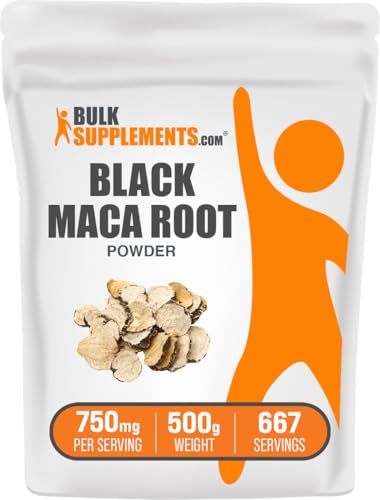
Maca root, a cruciferous vegetable native to the high altitudes of the Peruvian Andes, has a long history of traditional use as both a food and a medicinal herb. For centuries, it has been consumed by indigenous populations for its nutritional value and perceived properties to enhance energy, stamina, and fertility. Different colors of maca root, such as black and red, are often distinguished, though their specific traditional applications can vary.
When considering long-term use, it’s helpful to recognize this traditional context. However, traditional use does not automatically equate to modern scientific validation of long-term safety or efficacy, which is why examining contemporary research is essential.
Long-Term Safety in Human Studies: Limited but Promising Data
While comprehensive, large-scale, long-term human studies specifically on maca root’s safety for perimenopausal women are still developing, some research offers insights into its acceptability and safety over extended periods. One randomized, double-blind, placebo-controlled study investigated the acceptability, safety, and efficacy of oral administration of black or red maca extracts in adult human subjects. This study found that both black and red maca extracts were well-tolerated over a 12-week period [1].
The study reported no significant adverse events associated with maca consumption, suggesting a favorable safety profile for up to three months of consistent use in the doses examined [1]. This provides some reassurance regarding short to moderate-term safety, but more extended observation periods in human populations would offer even greater clarity on true long-term effects.
Insights from Animal Studies on Extended Maca Use
Animal studies can sometimes provide preliminary indications of safety, though findings do not always directly translate to humans. Research in animal models has explored various aspects of maca’s effects over time. For instance, one study examined the acute and chronic dosing of Lepidium meyenii (maca) on male rat sexual behavior, noting its effects over an extended period [2]. Another study investigated the antidepressant-like behavioral, anatomical, and biochemical effects of maca extract in mice exposed to chronic unpredictable mild stress, observing changes over time [3].
Further animal research has explored maca’s potential influence on persistent pain models in rats, utilizing a water extract of Lepidium meyenii root [4]. Additionally, a study observed how Lepidium meyenii Walp. improved sexual behavior in male rats independently from its action on spontaneous locomotor activity over a period . While these studies focus on specific effects rather than general toxicity, the absence of reported severe adverse events in these longer-term animal models can be a consideration. However, it is crucial to remember that animal physiology differs from human physiology, and these findings are not definitive for human safety.
More recent research, such as a 2023 study, explored Lepidium meyenii Walp (Maca)-derived extracellular vesicles and their potential to ameliorate depression by promoting 5-HT synthesis via the modulation of the gut-brain axis. This research, while focused on specific mechanisms, contributes to the growing body of knowledge on maca’s biological interactions [5].
Considerations for Perimenopausal Women
Perimenopause is a dynamic period characterized by fluctuating hormone levels, which can lead to a range of experiences. When considering maca root, women often seek support for common midlife concerns. While the available human research on maca’s safety for extended periods is limited, the existing studies, particularly the 12-week human trial, suggest a good safety and tolerability profile for moderate-term use [1].
It’s important for women to monitor their individual responses to maca root, just as they would with any new supplement. While current evidence does not point to significant safety concerns for moderate-term use, the long-term effects beyond a few months, especially in the context of perimenopausal hormonal changes, require further dedicated research.
References
- Acceptability, Safety, and Efficacy of Oral Administration of Extracts of Black or Red Maca (Lepidium meyenii) in Adult Human Subjects: A Randomized, Double-Blind, Placebo-Controlled Study. Pharmaceuticals (Basel, Switzerland), 2016
- Acute and chronic dosing of Lepidium meyenii (Maca) on male rat sexual behavior. The journal of sexual medicine, 2007
- Antidepressant-like behavioral, anatomical, and biochemical effects of petroleum ether extract from maca (Lepidium meyenii) in mice exposed to chronic unpredictable mild stress. Journal of medicinal food, 2014
- Effects of a water extract of Lepidium meyenii root in different models of persistent pain in rats. Zeitschrift fur Naturforschung. C, Journal of biosciences, 2017
- Lepidium meyenii Walp (Maca)-derived extracellular vesicles ameliorate depression by promoting 5-HT synthesis via the modulation of gut-brain axis. iMeta, 2023
These statements have not been evaluated by the Food and Drug Administration. This information is not intended to diagnose, treat, cure, or prevent any disease. Content is for informational purposes only and is not medical advice; consult a qualified healthcare provider before starting any supplement. As an Amazon Associate we earn from qualifying purchases.
