Maca root (Lepidium meyenii) is often described as a hormone booster, but that framing is misleading. Maca does not contain phytoestrogens or plant hormones in any meaningful concentration, and it does not act on estrogen or testosterone receptors the way some other botanicals do. When aqueous and methanolic maca extracts were tested directly in a yeast-based hormone-dependent reporter assay, they showed neither estrogenic nor androgenic activity[1]. Understanding what maca actually does in the body helps set realistic expectations before spending money on a supplement.
This article covers the compounds researchers believe are responsible for maca’s effects, how those compounds are thought to interact with the body’s regulatory systems, and where the evidence is strong versus speculative.
Maca’s Active Compound Classes
Maca root contains several compound families that show up repeatedly in the research: macamides and macaenes (unique fatty acid derivatives found almost exclusively in maca), glucosinolates (the same sulfur-containing compounds found in broccoli and other cruciferous vegetables), sterols, and alkaloids[2].
Macamides in particular are considered maca’s signature compounds because they are not found in other commonly consumed plants. They were characterised as a class of secondary metabolites so far identified only in Lepidium meyenii[3]. Laboratory work has since shown that macamides are structural analogues of the endocannabinoid anandamide[5], and that one of the more active ones, N-3-methoxybenzyl-linoleamide, inhibits fatty acid amide hydrolase, the enzyme that breaks anandamide down[4].
That is the basis for the endocannabinoid hypothesis behind maca’s reported effects on mood and libido. It is worth being precise about what that evidence is and is not: these are cell-culture and animal experiments, and they do not establish that macamides reach the human brain at the amounts present in a supplement serving.
The HPG Axis Hypothesis, Not Direct Hormone Action
The leading hypothesis in maca research is that it does not add hormones to the body but may support the hypothalamic-pituitary-gonadal (HPG) axis, the communication loop between the brain and reproductive organs that regulates hormone production.

This distinction matters. A supplement that directly supplies hormone-like compounds (as some phytoestrogens do) works differently, and carries different risk considerations, than one that may support the body’s own regulatory signaling. Researchers studying maca have generally not found significant changes in circulating reproductive hormones in trial participants.
A 12-week trial in men found improved sexual desire with no difference in serum testosterone or estradiol against placebo[6], and a crossover trial in postmenopausal women found no difference in estradiol, follicle-stimulating hormone, thyroid-stimulating hormone or sex hormone-binding globulin even while depression scores fell[7]. That is consistent with the axis-support hypothesis rather than direct hormonal action, but it is worth noting that no human trial has measured the HPG axis directly, so this remains a hypothesis and not a demonstrated mechanism.
What Animal Studies Show vs What Human Studies Show
Much of what is known about maca’s mechanism comes from animal and cell studies, where researchers can measure hormone levels, sperm counts, and brain and cell tissue directly. The neuroprotective and endocannabinoid findings described above come from exactly that kind of work[4][5].
Human studies are fewer, smaller, and generally short in duration (most run 6 to 12 weeks). They tend to measure subjective outcomes like self-reported libido or mood rather than the biochemical markers used in animal research. This gap between mechanistic animal data and confirmatory human data is one of the honest limitations in maca science.
Why Color and Processing Matter for Mechanism
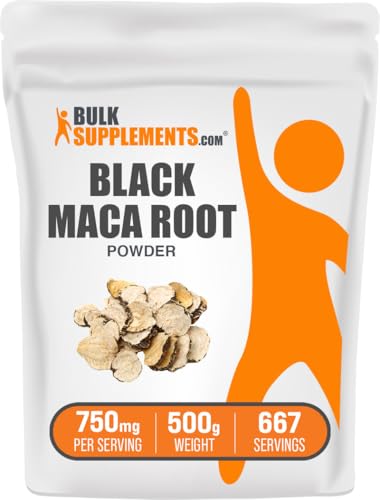
Different maca varieties (yellow, red, and black) contain different ratios of glucosinolates and other compounds, which is part of why some studies treat the colours as separate products. A 12-week placebo-controlled trial gave 175 adults black or red maca extract in separate arms and reported improvement in mood, energy and health status with both[8].
How maca is processed also affects its compound profile, and not as a minor detail. The slow postharvest field drying that maca undergoes hydrolyses its glucosinolates, and that catabolism is what determines the final ratio of bioactive macamides to breakdown products in the resulting flour[9]. Raw maca powder and gelatinized (pre-cooked, starch-removed) maca are therefore not interchangeable products, and the compound profile of any given product depends on its ecotype, growing conditions and processing[2].
Frequently Asked Questions
Does maca root contain hormones?
No. Maca does not contain estrogen, testosterone, or meaningful levels of phytoestrogens. Researchers believe its effects, where they occur, come from supporting the body’s own hormonal signaling rather than supplying hormones directly.

How long does it take for maca’s mechanism to produce noticeable effects?
Most clinical trials that reported benefits used maca for 6 to 12 weeks before measuring outcomes. Effects are not expected to be immediate.
Is macamide content standardized across maca supplements?
No official standardization exists industry-wide. Product quality and macamide content can vary significantly between brands and extraction methods, which is one reason results are inconsistent across studies.
References
- Beneficial effects of Lepidium meyenii (Maca) on psychological symptoms and measures of sexual dysfunction in postmenopausal women are not related to estrogen or androgen content. Menopause (New York, N.Y.), 2008
- Exploring the chemical and pharmacological variability of Lepidium meyenii: a comprehensive review of the effects of maca. Frontiers in pharmacology, 2024
- Analysis of macamides in samples of Maca (Lepidium meyenii) by HPLC-UV-MS/MS. Phytochemical analysis : PCA, 2005
- The macamide N-3-methoxybenzyl-linoleamide is a time-dependent fatty acid amide hydrolase (FAAH) inhibitor. Molecular neurobiology, 2013
- Neuroprotective activity of macamides on manganese-induced mitochondrial disruption in U-87 MG glioblastoma cells. Toxicology and applied pharmacology, 2018
- Effect of Lepidium meyenii (MACA) on sexual desire and its absent relationship with serum testosterone levels in adult healthy men. Andrologia, 2002
- Maca reduces blood pressure and depression, in a pilot study in postmenopausal women. Climacteric : the journal of the International Menopause Society, 2015
- Acceptability, Safety, and Efficacy of Oral Administration of Extracts of Black or Red Maca (Lepidium meyenii) in Adult Human Subjects: A Randomized, Double-Blind, Placebo-Controlled Study. Pharmaceuticals (Basel, Switzerland), 2016
- Glucosinolate catabolism during postharvest drying determines the ratio of bioactive macamides to deaminated benzenoids in Lepidium meyenii (maca) root flour. Phytochemistry, 2020
These statements have not been evaluated by the Food and Drug Administration. This information is not intended to diagnose, treat, cure, or prevent any disease. Content is for informational purposes only and is not medical advice; consult a qualified healthcare provider before starting any supplement. As an Amazon Associate we earn from qualifying purchases.
