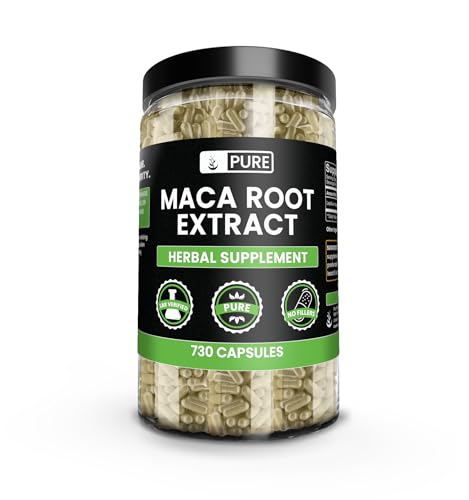
Ready to buy? Check current prices on Amazon and compare deals before you decide.
Navigating perimenopause often involves a range of physiological changes. For many women, understanding how various factors can influence overall well-being, including metabolic health, becomes increasingly important. Maca root has garnered interest for its potential adaptogenic properties and its traditional use.
This article will explore the current, albeit limited, research regarding maca root and its potential influence on blood sugar regulation. We’ll focus on what the available scientific evidence suggests, particularly its implications for women experiencing the shifts of midlife and perimenopause, while maintaining a careful, evidence-based perspective.
Understanding Blood Sugar in Perimenopause
Perimenopause is a transitional phase leading up to menopause, characterized by fluctuating hormone levels, primarily estrogen. These hormonal shifts can influence various bodily systems, including metabolism. Maintaining balanced blood sugar levels is a cornerstone of metabolic health, and disruptions can have broader implications for energy, mood, and long-term well-being.

While maca root is often discussed in the context of hormonal balance, its potential connection to blood sugar regulation is an area of emerging, though early, investigation. It’s important to approach this topic with an understanding that the research is still in its preliminary stages, largely conducted in animal models, and direct human evidence, especially specific to perimenopausal women, is lacking.
Maca Root and Glucose Metabolism: Early Animal Research
Some initial animal studies have begun to explore the relationship between maca root (Lepidium meyenii) and glucose metabolism. For instance, research conducted on rats indicated that maca might influence glucose metabolism [1]. This suggests a potential area of future investigation regarding how maca compounds might interact with the body’s systems that manage blood sugar.
Further animal research has also touched upon maca’s potential effects on metabolic parameters. A study involving mice fed a high-fat, high-sugar diet observed that a Lepidium meyenii-supplemented diet modulated biochemical parameters [2]. Another study in rats also examined biochemical parameters in relation to Lepidium meyenii extract [3]. While these findings are interesting, it is crucial to remember that results from animal studies do not always translate directly to humans, and the specific mechanisms are not yet fully understood.


Potential Mechanisms: What the Science Suggests (and Doesn’t)
The exact mechanisms by which maca root might influence blood sugar regulation are not definitively established. Some research has highlighted maca’s antioxidant properties [1], which could indirectly support cellular health and metabolic function. However, direct evidence linking these properties to a significant impact on blood sugar in humans, particularly perimenopausal women, is not yet available. Maca contains various bioactive compounds, and understanding which of these, if any, contribute to metabolic effects is an ongoing area of study [4].
It’s also worth noting that research on a related plant enzyme, Lepidium draba peroxidase, has explored its application in glucose biosensing [5]. While this highlights the scientific interest in compounds from the Lepidium genus in glucose-related applications, it is not direct evidence of maca root (Lepidium meyenii) influencing blood sugar in the human body.
Implications for Perimenopausal Women: A Cautious Perspective
For women in perimenopause, maintaining balanced blood sugar is an important part of overall health. While the animal research on maca root and glucose metabolism is a starting point [1][2], it is important not to extrapolate these findings directly to human health, especially for specific populations like perimenopausal women. The hormonal shifts during this time can uniquely influence metabolic processes, and research specifically on maca’s effects within this context is needed.
At present, there is no robust clinical evidence to suggest that maca root can reliably support blood sugar balance in perimenopausal women. Any potential benefits are purely speculative based on early-stage animal models. Women seeking to support their blood sugar health during perimenopause should prioritize established lifestyle strategies, such as a balanced diet, regular physical activity, and adequate sleep, and consult with a healthcare provider.
References
- The influence of maca (Lepidium meyenii) on antioxidant status, lipid and glucose metabolism in rat. Plant foods for human nutrition (Dordrecht, Netherlands), 2007
- Lepidium meyenii Supplemented Diet Modulates Neurobehavioral and Biochemical Parameters in Mice Fed High-Fat High-Sugar Diet. Endocrine, metabolic & immune disorders drug targets, 2021
- Use of Tribulus terrestris and Lepidium meyenii extract in rats: reproductive, biochemical and body parameters. Andrologia, 2022
- [Maca (Lepidium meyenii Walp), a review of its biological properties]. Revista peruana de medicina experimental y salud publica, 2014
- Covalent immobilization of Lepidium draba peroxidase on chitosan-coated magnetic nanoparticles and its application in glucose biosensing. Scientific reports, 2026
These statements have not been evaluated by the Food and Drug Administration. This information is not intended to diagnose, treat, cure, or prevent any disease. Content is for informational purposes only and is not medical advice; consult a qualified healthcare provider before starting any supplement. As an Amazon Associate we earn from qualifying purchases.
