Ready to buy? Check current prices on Amazon and compare deals before you decide.
Navigating midlife and menopause often involves exploring various options to support well-being, and for some, this may include both conventional medications like antidepressants and natural supplements such as maca root. Understanding how these might interact is crucial for informed choices.
When considering maca root alongside antidepressant medications, it’s important to approach the topic with careful consideration and an understanding of the available evidence. The research specifically on maca root and antidepressant interactions is limited, highlighting the need for caution and professional guidance.
Maca Root: A Brief Overview
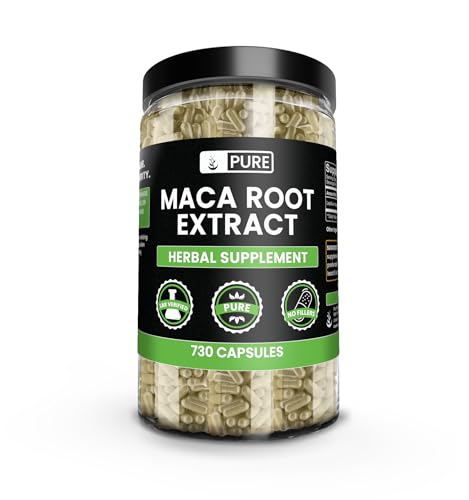
Maca (Lepidium meyenii) is a root vegetable native to the Andes mountains, traditionally used for its nutritional value and perceived health benefits. It is often consumed in powdered form and has gained attention for its potential to support hormonal balance and vitality, particularly for women experiencing midlife and menopausal changes.
While maca root is generally considered safe for many individuals, its interaction with pharmaceutical medications, particularly those affecting mood and neurological pathways like antidepressants, requires careful attention. The complex biochemical nature of both maca and antidepressants suggests that potential interactions, though not fully understood, could exist.
Antidepressants and Their Mechanisms
Antidepressants are a class of medications commonly prescribed to help manage mood imbalances, anxiety, and other related conditions. They work through various mechanisms, often by influencing neurotransmitters in the brain such as serotonin, norepinephrine, and dopamine. The specific way an antidepressant functions can vary significantly depending on the drug type.
For women in midlife and menopause, antidepressants may be prescribed for mood shifts, anxiety, or even to help manage certain menopausal symptoms. Due to their impact on brain chemistry, introducing other substances that also affect these pathways warrants careful consideration.
Potential for Interactions: What the Evidence Suggests
The scientific literature specifically examining direct interactions between maca root and antidepressant medications is limited. However, some research has begun to explore the broader topic of adaptogens, a category that includes maca, and their interactions with antidepressants.
A retrospective chart review published in 2023 looked at adverse events related to interactions between adaptogens and antidepressant drugs. This review identified that some adaptogens, when combined with antidepressants, were associated with adverse events. However, the study did not specifically focus on maca root in isolation or provide detailed mechanisms of interaction for each adaptogen [1]. This indicates a need for more targeted research.
It’s important to note that while some studies have explored maca root’s potential to address antidepressant-induced sexual dysfunction, these studies focused on maca’s effects on a known side effect of antidepressants, rather than on direct drug-herb interactions. For example, a double-blind, placebo-controlled trial investigated maca root for antidepressant-induced sexual dysfunction in women [2]. Another pilot study also explored maca root for SSRI-induced sexual dysfunction [3]. These studies suggest maca may have some modulating effects, but they do not confirm safety or lack of interaction when taken concurrently with antidepressants. The focus was on managing a side effect, not on the interaction with the antidepressant itself.
Understanding the ‘Limited Evidence’ Status
When we say the evidence is ‘limited,’ it means there isn’t a large body of high-quality research, such as extensive clinical trials, specifically designed to evaluate how maca root interacts with various types of antidepressant medications in human subjects. The available studies are either broad in scope, like the review on adaptogens [1], or focus on specific symptoms rather than direct drug interactions [2][3].

This lack of specific evidence means that potential interactions, whether beneficial, neutral, or adverse, are not well-understood. Without dedicated research, it’s difficult to predict how maca might influence the effectiveness or side effect profile of an antidepressant, or vice versa. This uncertainty underscores the importance of a cautious approach.
Safety Concerns and Considerations
Given the limited evidence, several safety concerns warrant attention when considering maca root alongside antidepressants. Both maca and antidepressants can influence mood and neurological function. The combined effect of these substances is not fully characterized and could potentially lead to unexpected outcomes.
Possible concerns could include an amplification of antidepressant effects, leading to symptoms like agitation or serotonin syndrome in rare cases, or conversely, a reduction in the antidepressant’s effectiveness. Other potential issues might involve an increase in side effects commonly associated with either substance. Without specific interaction studies, these possibilities remain theoretical but highlight the need for careful monitoring.
It’s also important to consider the individual variability in how people respond to both medications and supplements. Factors like metabolism, existing health conditions, and the specific type and dosage of antidepressant can all influence potential interactions. Therefore, what might be tolerated by one person may not be by another.
References
- Harder, better, faster, stronger? Retrospective chart review of adverse events of interactions between adaptogens and antidepressant drugs. Frontiers in pharmacology, 2023
- A double-blind placebo-controlled trial of maca root as treatment for antidepressant-induced sexual dysfunction in women. Evidence-based complementary and alternative medicine : eCAM, 2015
- A double-blind, randomized, pilot dose-finding study of maca root (L. meyenii) for the management of SSRI-induced sexual dysfunction. CNS neuroscience & therapeutics, 2008
These statements have not been evaluated by the Food and Drug Administration. This information is not intended to diagnose, treat, cure, or prevent any disease. Content is for informational purposes only and is not medical advice; consult a qualified healthcare provider before starting any supplement. As an Amazon Associate we earn from qualifying purchases.
